


Andrei Martynenko

Backend Engineer (Go)

Event-Driven Systems | Financial Systems | Distributed Processing

Designing backend systems for data-driven and financial environments. Backend engineer specialising in Go and event-driven architectures, combining software engineering with over 10 years of financial domain experience in regulated banking environments. My work focuses on building reliable backend services where correctness, traceability and predictable behaviour under load are critical.

Profile

Profile

SMBC SMBC
Deutsche Bank Deutsche Bank
Alfa-Bank Alfa-Bank

My background combines financial systems experience with backend engineering.

I have hands-on experience with:

  • Event-driven processing pipelines
  • Idempotent transaction handling
  • Deterministic system outputs
  • Audit-friendly data modelling
  • Controlled concurrency and backpressure

Working within regulated banking environments shaped how I approach system design — with a strong focus on correctness, reproducibility, and operational reliability.

These patterns are particularly important in systems processing financial or operational events where reliability and reproducibility matter.

Engineering Approach

I build backend systems in Go with emphasis on:

  • API-driven backend services
  • Event-driven processing pipelines
  • Idempotent request handling
  • Controlled concurrency and bounded worker pools
  • Explicit retry and timeout policies
  • Backpressure and graceful degradation
  • Reproducible and deterministic processing flows

The focus is building systems where behaviour is explicit, observable, and operationally reliable.

Projects

Proof-of-Signal — Event-Driven Signal Processing Platform

Backend system demonstrating event-driven processing pipelines with deterministic output verification.
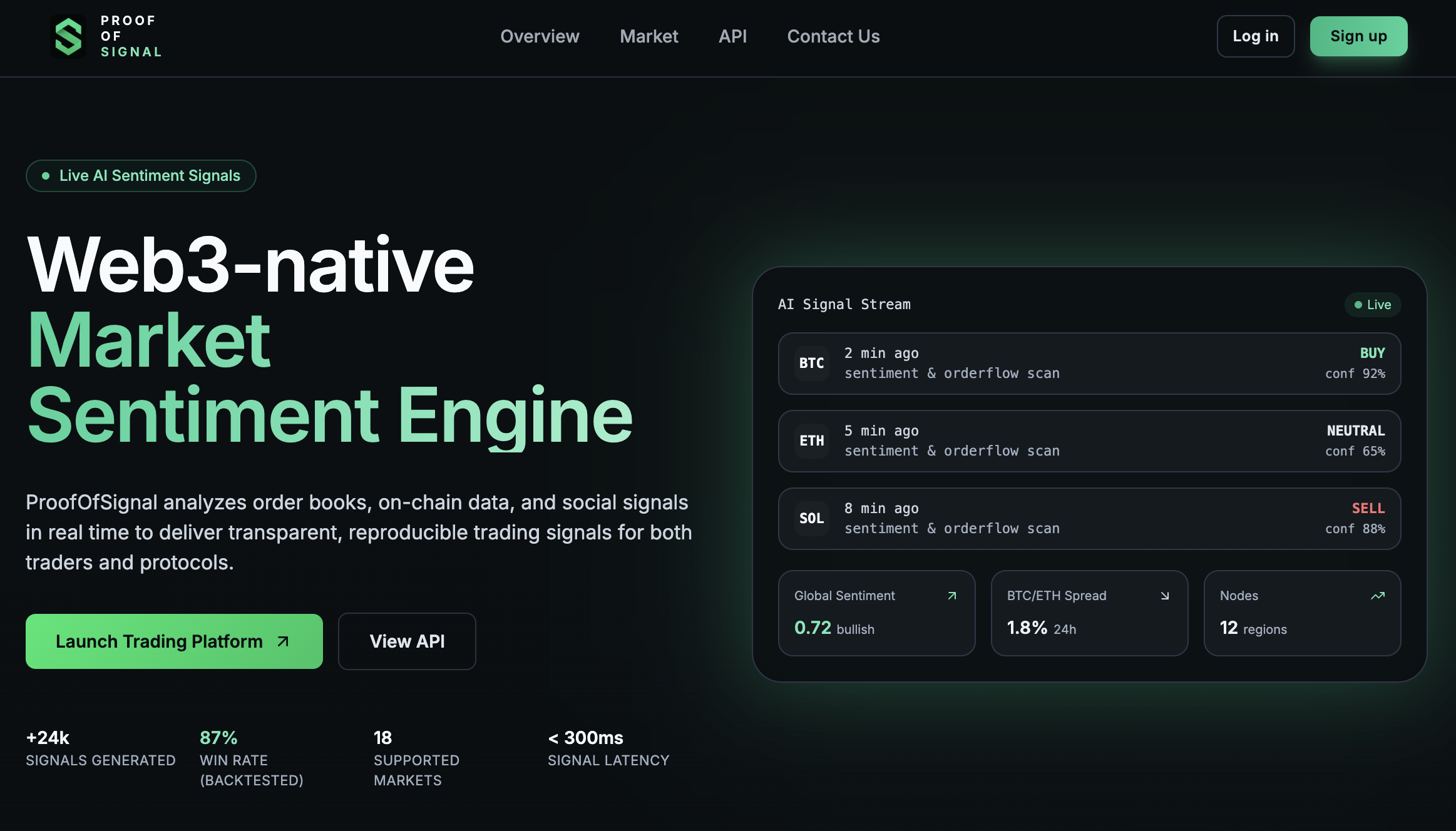
Proof-of-Signal platform architecture screenshot

Problem / Focus

Backend system demonstrating event-driven processing pipelines where a Go API gateway ingests data events and integrates with a Python ML service for signal enrichment. Each generated signal produces a deterministic SHA-256 proof hash allowing outputs to be reproduced and verified across runs. The project focuses on backend architecture patterns rather than trading logic.

Key engineering aspects

  • Event ingestion and normalization pipelines
  • Deterministic processing and idempotency
  • Multi-service architecture (Go gateway + ML service)
  • Background workers for signal processing
  • Reproducible outputs using cryptographic hashing

Tech stack

Go PostgreSQL Redis Docker Python (FastAPI)

What it solves

A deterministic event-driven processing pipeline where a Go gateway ingests data events and a Python service enriches them to produce reproducible signals.

  • Event ingestion and normalization
  • Idempotent processing and deduplication
  • Deterministic outputs with a SHA-256 proof hash
  • Replay mode for verification across runs
  • Separation of decision logic and operational side-effects

The focus is backend architecture patterns: controlled processing under load, explicit failure handling, and reproducible outputs.


Signal Processing Pipeline (Live) External inputs Data events News/market feeds Batch + stream Ingest + normalise Schema validation Ordering + dedup Idempotency controls Enrichment Python service call Sentiment + indicators Bounded retries Signal output Deterministic payload Stored for retrieval Reproducible result Consumers Dashboard/API Notifications Controlled effects Idempotency + ordering + deduplication · Separation of decision logic and side-effects Replay & Verification Mode Replay historical events Versioned inputs Same enrichment flow Deterministic execution Verification & regression Compare outputs Detect drift Reproducible results Proof hash SHA-256 fingerprint Inputs + output context Verification artifact A deterministic event-driven backend demonstrating reproducible signal generation and verification via cryptographic hashing.

FlowForge

Event-driven backend architecture prototype in Go exploring service isolation, async workflows, and observability in distributed systems.

FlowForge platform architecture diagram

Problem / Focus

Exploration of event-driven communication patterns, service boundaries, and reliability-oriented design.

Key engineering aspects

  • gRPC service-to-service communication
  • Event-driven integration concepts
  • Data ownership per service
  • Async side-effects isolated from hot paths
  • Observability fundamentals (metrics, logs, tracing concepts)

Tech stack

Go PostgreSQL Redis gRPC Docker

Education

Kingston University London

Kingston University London

2025 — 2026

MSc Software Engineering with Management

Kingston Business School

Kingston University London

2020 — 2022

MSc Banking & Finance

Plekhanov Russian University of Economics

Plekhanov Russian University of Economics

2013 — 2018

Bachelor’s Degree in Finance

Contact

Location

London, United Kingdom

Work Eligibility

Currently based in London and eligible to switch to Skilled Worker visa.